Thursday, December 16, 2010

Six non-Olympic sports make the 2014 Incheon Asian Games list

XVII Asian GamesImage via Wikipedia
PETALING JAYA: The Olympic Council of Asia (OCA) have confirmed that squash, bowling, karate and wushu are on the list of eight non-Olympic sports that will be contested in the 2014 Asian Games in Incheon.
And it was sweet music indeed for Malaysia, who recorded their best-ever showing in the history of the Asiad with a haul of nine gold medals in Guangzhou last month.
Initially, there were fears that bowling would be shifted to the Asian Indoor Games in 2013 as the OCA were keen to streamline the number of non-Olympic sports for the Asiad.
The OCA meeting held on the sidelines of the Asian Beach Games in Muscat over the weekend agreed to let it remain in the Asian Games. But they dropped cue sports and softball.
The OCA gave the thumbs up to the 28 Olympic sports on the programme for the 2016 Rio de Janeiro Games along with baseball, bowling, cricket, kabbadi, karate, sepak takraw, squash and wushu.
The 17th Asian Games will feature 36 sports, six fewer than in edition in Guangzhou.
The Malaysian Tenpin Bowling Congress (MTBC) secretary, Sidney Tung, said that they were relieved that the matter had been laid to rest.
“There were rumours that bowling would be taken out of the next Asian Games,” he said.
“The Asiad is the biggest multi-Games participation for us and something our bowlers look forward to. We are happy and we never wanted to be in the Asian Indoor Games.
“Bowling is very popular among Asian countries and South Korea did very well (in the Guangzhou Games) and there was really no reason for us to worry (that it would be dropped from the Incheon Games).”
But there will certainly be disappointment for Malaysia if bowling, squash, karate or wushu were excluded from the 2014 Asiad programme.
The four sports accounted for eight of the nine gold medals won by the Malaysian contingent at the Guangzhou Games.
The only gold medal coming from an Olympic event was from cyclist Azizulhasni Awang in the keirin discipline.

read more...

Para games add to harmony in Asia

Photo taken on Dec. 12, 2010, shows the opening ceremony of the 2010 Asian Para Games held in Guangzhou, south China's Guangdong Province. (Xinhua/Lu Hanxin)
BEIJING, Dec. 13 (Xinhuanet) -- The 16th Asian Games in the Guangdong provincial capital Guangzhou presented audiences with a magnificent sporting feast. Now Asian people's attention will once again be on the booming Pearl River city as the Asian Para Games began on Sunday.
The Guangzhou Asian Para Games is the second major sports event for disabled athletes in China after the 2008 Beijing Paralympics.
The Asian Para Games was previously known as the Far East and South Pacific Games for the Disabled (FESPIC). In 2006, the Asian Paralympic Committee was set up to push forward the development of sports for disabled people in Asia and help boost their social status. The same year, the committee decided to change the FESPIC into an event for disabled athletes in Asia and chose Guangzhou as the host for its first games.
Ever since, the millennium-old port has been carrying Asian disabled people's sporting dreams under the slogan "we cheer, we share, we win".
Guangzhou has been striving to develop the regional Asian Para Games into a grand event which all people can enjoy. The gathering of disabled athletes and non-disabled people from across Asia in Guangzhou, where they can cheer together and extend mutual blessings, will be a fitting realization of "Spirit in Motion", the original concept of the Paralympics.
The Guangzhou Asian Para Games is also devoted to driving home the idea that disabled people and non-disabled people are equally privileged both in sports and in social life. Everyone should share the joy, friendship, dreams and success that sport can provide.
The Guangzhou Asian Para Games will be an important stage for the athletes to display "self-esteem, self-confidence, self-striving and self-reliance". In such an event there are no losers and all participants are winners.
The Guangzhou authorities and its residents have made concerted efforts to make the Asian Para Games a resounding success. More than 20,000 slopes have been renovated to make them accessible to wheelchair users. Audible signals have been installed in more than 500 crossings for the convenience of the blind. More than 70 bus stops across the city have been made barrier free and special paths have been paved for the disabled in front of many shops. There are also specially designed ATMs, booths and service stations. A total of 25,000 volunteers have received specialized training to offer assistance to those in need.
At a large charity party held in Guangzhou in early September to mark a 100-day countdown to the games, stars from China, the Republic of Korea (ROK) and Singapore performed, raising more than 30 million yuan for the cause of sports for disabled people.
A number of large enterprises from home and abroad have also supported the event. At a sponsored arts exhibition in Beijing in November, Chinese and ROK disabled artists co-authored a work displaying their common love for life.
Philip Craven, president of the International Paralympic Committee (IPC), has commended Guangzhou's efforts in hosting the event and said he believes the games will be a milestone in the event's history.
Dato' Zainal Abu Zarin, president of the Asian Paralympic Committee, also praised Guangzhou's organizing work, expressing his confidence in the Games' success and its promotion of an inclusive society.
The Guangzhou Asian Para Games will not only help foster a more inclusive society, but also enrich the cooperation among Asian nations and inject new vitality into their bid to construct a harmonious Asia.
We sincerely believe the event will help create a better future for Asia.
(Source: China Daily)
read more...

Saturday, December 11, 2010

Incheon: Incheon Asian Games (2014) Expected to be the Best One in History


INCHEON, South Korea--(BUSINESS WIRE)--The Incheon Asian Games will be held for 16 days from September 19 to October 4, 2014 and approximately 20,000 players and staff from 45 member countries of the Olympic Council of Asia (OCA) will be participating.
The games will provide an opportunity to showcase the history, culture, tradition, and religion of each Asian country and enhance mutual understanding, respect, and consideration while overcoming conflicts among countries and races. International seminars inviting renowned scholars to illuminate the coming Asian Era and cultural events that each Asian country joins will be held; these are also expected to contribute to enhancing the value and identity of Asians.
The games will be one tailored to satisfy customers. Citizen supporters and officials of each country in charge will be organized, and they will provide services tailored to the culture and tradition of each country. The games will be held at the athletic stadium built on reclaimed land from waste materials, symbolizing the resuscitation of nature through sports, i.e., “Green Event.”
Since the games are to be held in the Republic of Korea, an IT powerhouse, cutting-edge IT technologies will be put to full use. All sporting events will be transmitted with precision and speed. On-the-spot reporting on the process and the results will be provided. More importantly, benefits will be expanded through the economic management of the games and the development of new projects.
The mascots of the 2014 Incheon Asian Games -- three brindled brothers and sisters of harbor seals with the names “Vichuon, Barame, and Chumuro” -- put Asia in the spotlight. The 2014 Incheon Asian Games Organizing Committee introduced these official mascots to the world at the Songdo ConvensiA held on the 4th of last month.
Harbor seals used to live on the northern region over 45 degrees north latitude. Endemic to Baekryeong Island located in the region south of 38 degrees north latitude, those harbor seals have established their habitat on the rocks in front of the island. May South and North Korea and Asia as well as the whole world be filled with peace, just like an ordinary day in spring when those harbor seals in Baekryeong Island enjoy the sunlight peacefully.
read more...

Sad state of athletics

BRUSHING shoulders with the ‘Flying Doc’ Tan Sri Dr Mani Jegathesan at the recent Asian Games in Guangzhou evoked mixed feelings about Malaysian sports.

It felt good standing beside the man who sprinted to the country’s first-ever Asian Games gold medal – in the 200m – at the 1962 Jakarta Asiad. (In the 1966 Bangkok Asiad, he won the 100m, 200m and 4x100m gold medals.)

It was also a thrill to be in his company to witness Malaysia’s current generation of athletes achieve their best-ever outing of nine gold medals in Guangzhou.


Below the bar: Pole vaulter Roslinda Samsu is one of the Malaysian athletes who failed to shine at the recent Asian Games in Guangzhou.
 
But his presence also exposed a harsh reality – Malaysian athletics is down in the doldrums.
In his day, Malaysian athletics was the pride of the nation, as were many other sports like football and badminton.

There were other track and field gems too, like Datuk M. Rajamani, Rabuan Pit, Ishtiaq Mubarak and Zaiton Othman, just to mention a few.

Malaysian athletics then was able to replace fading and aging stars with young and bright talent.
While Jegathesan has gone on to earn the status of a respected sports figure in the Asian region, the current athletics scene in the country has only gone downhill.


At the Aoti Main Stadium in Guangzhou, where China’s icon Liu Xiang ran an explosive race to win the 110m hurdles to the thunderous cheers of his adoring home fans, Malaysia’s Jalur Gemilang was sadly nowhere to be seen.

There were only red-faced Malaysian officials, dashed hopes and another piece of evidence of the country’s waning prowess in the blue ribband sport for the world to see.

The athletes, who are showered with all kinds of grants and assistance, are not the only one to blame.
The Malaysian Amateur Athletic Association (MAAU) need to share the blame, having failed to get their act right despite repeated meetings and brain-storming sessions in search of solutions.
And why the MAAU’s official are not doing anything concrete to restore the bruised, battered and tattered image of athletics is beyond comprehension.

Athletics is no longer as popular in schools, colleges and universities as it used to be. The only noises coming from the MAAU are ones of bitterness, bickerings and back-stabbings.

Enough said of the sad state of athletics.

Another aspect of the Guangzhou Asiad that really stood out was the presence of their volunteers.
A total of 6,000 students, ages ranging from 18-22, went out of their way to make the Asian Games a memorable one.

They endured long hours – and without pay, mind you – but their lovely faces never failed to flash the most genuine of smiles.

“It is our pleasure to help you,” was always their heartfelt and humble answer.
If only we could find such enthusiastic bunch of youngsters willing to work for free when we hold such sporting events.

Come to think of it, most of our Nationals Sports Associations (NSAs) are manned by volunteers as well.
Take Jegathesan for example. He is the Olympic Council of Malaysia (OCM) deputy president and he was in Guangzhou heading the Olympic Council of Asia (OCA) medical committee.

Volunteers like Jegathesan are a dying breed in Malaysia, where we have an aging and seriously depleting numbers of volunteers.

And those who do come to help are mostly driven by monetary returns – and not for love of the game.
Old dinosaurs still warm the seats of most NSAs while youngsters are too busy with everything else except sports, thus our dependancy on people like Jegathesan to continue managing the associations.

The National Sports Council (NSC) are expected to receive a bigger budget from the government following the success of meeting their nine-gold target in Guangzhou.

In fact, some lobbying is already taking place for Malaysia to host the 2023 Asian Games.

But rather than devoting all of the budget to the small number of elite athletes and investing on unworthy sports projects – like hosting the 2023 Asiad – the money should be pumped into unearthing new talents through grassroots development programmes.

Malaysia needs new blood – both athletes and sports officials – for a better future. The kinds that will make Jegathesan proud to pass the baton on to.
read more...

Viet Nam bids for 18th Asian Games

Viet Nam bids for 18th Asian Games at
Eyes on the prize: Viet Nam's women's relay team are strong contenders at the Asian Games and Southeast Asian Games. Viet Nam is bidding to host the 18th Asian Games. � VNS Photo Quang Thang
HA NOI � Viet Nam is confident it will get the go-ahead to host several major sporting events over the next 10 years. The biggest will be the 18th Asian Games (ASIAD).
Hosting the four-yearly games, the biggest in the Asian sporting calendar, brings not only prestige but also an economic boost.
The 18th edition will kick off in 2019 and will be a hotly contested affair.
The Vietnamese Government sent its application to the Olympics Council of Asia (OCA) in March. Following Malaysia's withdrawal over costs, just Hong Kong, the United Arabia Emirates, India, the Philippines, Chinese Taipei and Viet Nam are in the running. Viet Nam considers India to be the strongest contender.
"[Malaysia's withdrawal] is good news for us. Now our main rival is India � the others are unlikely to be successful," said Hoang Vinh Giang, general secretary of the Viet Nam Olympic Committee.
In India's favour is its superior infrastructure, which is a major consideration for the OCA, Giang said.
"However, Viet Nam's successful hosting of the third Asian Indoor Games in 2009 will be to our advantage. In my opinion, the stability of the political situation in the country will play a major role in the OCA's final decision," Giang said.
Giang said the biggest challenge facing Viet Nam is the huge cost involved in hosting the games.
Malaysia withdrew from the race because the government felt the nation could not afford the 1.6 billion Malaysian ringit (US$517 million) cost of hosting the games. Furthermore, that figure does not include construction costs.
However, Giang said the Government would not have allowed the committee's bid to go ahead if it had felt the nation could not afford the cost involved.
If successful, Giang said eight years would be ample time for Viet Nam to get ready for the games.
"Many difficulties await. Eight years is not a long time to get ready for the games, but our success in hosting recent tournaments and festivals has raised Viet Nam's profile.
"The Vietnamese people will be delighted if the country hosts the 18th ASIAD. For that reason, I believe if we host the 18th ASIAD it would be a great success," Giang said.
The 16th ASIAD takes place in China's Guangzhou province this November, while the 17th will be held in Incheon, South Korea, in 2014.
Viet Nam, whose strongest events are martial arts, chess, sepak takraw (rattan ball kicking) and petanque, is also hoping to host the Southeast Asian Games and the Asian Beach Games in 2016, and the Indoor Martial Arts Games two years later. � VNS
read more...

Tuesday, December 7, 2010

W-DMX lights the 2010 Asian Games


Wireless Solution Sweden helped celebrate the 16th Asian Games
China - Wireless Solution Sweden helped celebrate the 16th Asian Games, which took place in Guangzhou, China, 12-27 November. The lavish, multi-media Grand Opening (complete with a fireworks spectacle) was held outside Guangzhou's main stadium for the first time at Haixinsha Island on the Pearl River and drew more than a reported 3m spectators.
The Asian Games, held every four years, are the second largest sports event in the world after the Summer Olympic Games. Guangzhou is the second Chinese city to host an Asian Games following Beijing in 1990. A record number of nearly 14,000 athletes from 45 countries and regions participated in 476 gold medal events in 42 sports.
The organizer and director of the opening ceremony, Chen Weiya explained that the ceremony was designed to include a conventional light show, a pyrotechnics display, plus a show that Chen described as a "knock your socks off" presentation including a "lightning show".
W-DMX is installed inside of the 80 Terbly 1500 Beam automated fixtures supplied by Golden Sea that were used to light up the stadium for both the opening and closing ceremonies of both the Asian Games and Asian Para Games.
Terbly fixtures, one of Wireless Solution's leading OEM manufacturers in China were used to bring what was described as 'choreographed lighting' into these ceremonies by the world's leading lighting and set designers, performing perfectly in front of visitors, dignitaries and athletes from all over the world.
"This was a big honor for us to be involved with such a prestigious sporting event in China," says Wireless Solution CEO Niclas Arvidsson, "The ceremonies won enormous praise from worldwide press and the equipment ran without fault. What more could we ask for?"
(Jim Evans)
(7 December 2010)
read more...

Monday, December 6, 2010

Fun and games over 2023 bid

Local Asian Games medalists appeared at a Legislative Council meeting on Wednesday to make a collective plea for Hong Kong to bid for the 2023 event.The remark by gold-winning cyclist Wong Kam-po that he is saddened by the apathy shown by political parties on the matter was widely reported the following day.
Insiders said the pressure generated by Wong's lament was particularly felt by the Democratic Alliance for the Betterment and Progress of Hong Kong, which has openly stated its opposition to any bid.
I've learned the DAB has invited "Ah Po" to participate in the party's sports day to discuss the matter face-to-face.
A DAB member of Legco told me it is understandable for athletes to want Hong Kong to host the Asiad, but the views of the general public must also be taken into account.
The DAB will therefore continue to lobby the government to construct more sports facilities meeting international standards, to promote sports in schools, and to nurture more local athletes.
The party is of the view that such endeavors should proceed regardless of whether Hong Kong ends up hosting the 2023 Games.
The member said a friend in the mainland has observed that Guangzhou has enjoyed many advantages in hosting the recent 2010 Asian Games.
Apart from the prestige factor, the city was also exempted from certain usual fiscal contributions to the central government, and was allowed to redeploy the money to build infrastructure.
On top of that, Beijing gave the G
uangdong capital 50 billion yuan (HK$58.3 billion) to help prepare for the Games. So for Guangzhou, hosting this year's Games has been a win-win proposition, but Hong Kong would not have the same advantages as a host city.
It is also inconceivable that we would garner a lot more gold medals than the eight we won this time just because of the "home turf" advantage.
Wong and other athletes believe that hosting the Asian Games will spur public support for sports, but the Legco member pointed out that Hong Kong will not win more gold medals unless more public resources are devoted to promoting sports.
Such diverse views on the issue have yet to be reconciled. Siu Sai-wo is chief editor of Sing Tao Daily
read more...

Asian Games 2010 (Strategies and Tactics of Middle-East)

Asian Games 2010

Strategies and Tactics of Gulf States.

As for the Middle-East, it was seen that many of the men in the middle distance and long distance events having former top Ethiopian or Kenyan runners running to specifically run for Qatar and Bahrain. If we look at the top three 5000m track winners of Asian Games 2010, the champion was from Bahrain(former Ethiopian) and the second and third position were from Qatar (former Kenyans).

An interesting fact to note is that in 2006 Asiad in Doha, the Kenyan-born runners won the men's 800m, 1500m, 5000m, 10,000m, 3000m steeplechase and marathon events. Apart from a bronze in the marathon, and two minor medals in the 800m, all the male podium finishers were African.

For the year 2010, Bahrain won the men's 5000, 10,000 and 3000m steeplechase. Bahrain should thank the two former Kenyans (Ali Hasan Mahboob, Tareq Mubarak Taher) and one Ethiopian-born athlete (Bilisuma Shugi Gelassa).
Picture  1 - Ethiopian-born Mimi Gebregeiorges, the 5000m winner dashed hopes of Preeja, from India, of getting the second gold. Mimi ran for Bahrain.


The Gulf kingdom also claimed gold when Maryam Jamal won the 1500m women finals while in the 5000m, Mimi Gebregeiorges won the race. Both were formerly from Ethiopia.

Picture 2 - Maryam Jamal came in first in Asian Games 2010 (1500m women finals)

As for Jamal, who unsuccessfully applied for citizenship in the United States, Switzerland and France before settling on Bahrain, the country's flag an athlete might fly was of little matter, as long as you won. She said ,"Nationality is not important. What counts more is good practice instead of where I come from." Mohammed Shaween, the men's 1500m winner supports Jamal's statement by saying, "I think the competition is quite important," he said when quizzed about his feelings about African athletes changing allegiances.

Picture 3 - Mohammed Shaween is the winner of 1500m men.


"If there is a country providing a chance to train the athletes, I think it doesn't matter which country the athletes represent." It is also known that long distance runners, however, spend more time training, ironically, in the countries of their birth as the lack of altitude and inclement hot temperatures of the Middle-East states make it impractical.

The running under the flag of a borrowed nationality has several advantages. Often competition for places in their home countries is so strong that they might never appear internationally. This is especially so in countries like Ethiopia and Kenya.

There is also the lure of better pay, win bonuses and expenses paid beyond the realms of what they could earn at home.

"You have to look for where you can be looked after," 5000m silver medallist James Kwalia said, adding that facilities in his homeland of Kenya were not as good as in Qatar, for whom he now runs.

Picture  3 - In the 5000m race, James Kwalia, second from left, is a true bred Kenyan, who ran for Qatar in the Asian Games 2010 and became a silver medalist.


Gulf officials were able to rebut back on complaints over athletes switching nationalities, saying that European countries and the United States have long been naturalising other countries' runners for their own purpose.
read more...

China funded Indian team to win water polo gold

China women's team after winning water polo gold
BANGALORE: That China never let go even a single medal-winning opportunity at the just concluded Asian Games is no secret. They successfully lobbied for the inclusion of popular Chinese sports like Weiqi and Xianqqi in the 16th edition of the Games. They even denied entry to a strong Indian equestrian team to help the Chinese riders.

But as strange as this may sound, the same Chinese authorities 'sponsored' a weak Indian women's water polo team that competed in the quadrennial event. The China Waterpolo Association worked overtime to ensure that the Indian eves arrived in Guangzhou in time for the competition. Their travel documents were processed with due diligence even as some of the Indian journalists waited for months to get the visa approval. It spent around Rs 6 lakh for the 15-member contingent's air travel. Besides, the players were provided accommodation at the Games Village.

Why did China take such a huge interest in the participation of an Indian team? Reason: They got one more gold medal from an event which was on the verge of becoming a non-medal sport. Women's water polo, which made its debut in Guangzhou, had attracted only three entries. So the presence of a fourth team became inevitable to be counted as a medal event. At this juncture, CSA requested the Swimming Federation of India (SFI) to send the Indian team.

China spent a lot of energy and money to get India's participation. They got the reward in the gold medal, a top official from Asia Swimming Federation told TOI on condition of anonymity. Fancied China clinched the gold, demolishing the other three opponents. Kazakhstan took home the silver while Uzbekistan claimed bronze.

The Indian eves, as expected, cut a sorry figure, finishing at the bottom of the table. They conceded 96 goals in three matches -- a whopping average of 32 goals per match -- while managing to score only six goals. China and Kazakhstan fired 38 goals each against India while Uzbekistan pumped in 20.

Back home, swimming observers raised a hue and cry over the team's pathetic show. But SFI general secretary Virendra Nanavati remains unfazed and defends the federation's decision to send the team. "CSA had offered an all-expenses paid trip for our women's team. Had we not sent our team, waterpolo's future at the Games would have been in jeopardy," he told TOI.

"We had picked the team for the Commonwealth Waterpolo Championship scheduled to be held in the first week of November in Chennai. Unfortunately, it was cancelled following the withdrawal of Canada, England and New Zealand. We had the team ready at our disposal. When we got the request from our Chinese counterpart, we decided to send them immediately," he added. "We wanted water polo to remain as an event at the Asian Games. The OCA may be tempted to drop the event in the next edition citing lesser number of entries."

Nanavati also said the federation did not take a single penny from the players. "It's an all-expenses paid trip. Then why should we take money from the players?" he asked.

On the composition of the team, Nanavati said all the national campers, who had a passport when the invite came, were allowed to go to China. "It is not true that players from Police were denied the opportunity. Two Police players were there in the camp, and only one had a passport," he added.


read more...

What Happens After Asian Games 2010

What Happens After Asian Games 2010

Jakarta. Indonesia’s medal-winning athletes at the Asian Games are not only coming home as heroes, but many of them are richer to the tune of over a billion rupiah.
The State Ministry for Youth and Sports Affairs said on Sunday that cash bonuses promised to all medal winners as an incentive would be paid out this week.
“Our athletes did what they were supposed to do. Now it’s our turn,” Wafid Muharram, the ministry’s secretary, said on Sunday. “They will receive their bonuses on Wednesday during a ceremony tentatively scheduled to be held at the KONI [National Sports Committee] office.”
The payout levels are Rp 400 million ($45,000) for every gold medal, Rp 200 million for silver and Rp 50 million for bronze.
The largesse will cost the government dearly, however. Indonesia won a respectable four golds, nine silvers and 13 bronzes in the two-week competition, so the cash incentives total up to some Rp 44.3 billion.
The figure is far more than many officials would have thought likely, as it was swollen by the surprise treble victory of the men’s dragon-boat rowing team. They won three golds, and each member of the 22-strong team will receive three payouts as a result. The team is expected to receive Rp 26.4 billion.
Until the 2006 Asian Games in Doha, individual medalists were awarded a different incentive package from medalists in team events. But it was announced just before this year’s Games that all medal winners would receive the same financial rewards.
Wafid emphasized that there was no intention of altering the bonus scheme, which was announced just before the Games began in Guangzhou.
Indonesia’s performance in China was much improved from the one it produced at the last Asian Games. The country won two golds and 20 medals overall in Doha. Senior sports officials have said they are “satisfied” with this year’s results.
Shuttlers Markis Kido and Hendra Setiawan, who won the badminton men’s doubles title, accounted for the fourth gold.
The government will give out a total of Rp 15.2 billion for the silver medalists. That includes the 22-member women’s dragon-boat team, which finished runner-up three times. The bronze medalists’ bonus totals Rp 1.9 billion.
Sarce Aronggear, who like the other women’s rowers stands to receive Rp 600 million, said she would use the money to fulfill a life-long goal. “I’ll buy a house. That’s always been my dream,” the Papuan rower said.
The coaches of the medal-winning athletes are also eligible to receive financial incentives.
Coaches of gold medalists are set to earn Rp 100 million, silver medalists Rp 50 million and bronze medalists Rp 25 million.
read more...

India's new sporting heros have sown seeds for a rewarding 2012 olympics

After a fortnight of gruelling sport, India's athletes, with their best ever Asian Games medal haul ” 14 gold, 17 silver, 33 bronze ” here in Guangzhou, have proved that they are now ready to take the big leap in international sporting glory at London 2012.


India's Joseph G Abraham competes in the men's 400m hurdles heats during the 12th IAAF World Athletics Championships at the Olympic Stadium on August 15, 2009 in Berlin, Germany. PIC/Getty Images
This is not to suggest that India have conquered the Asian sporting circuit. India is far from doing that. But, the fact that Guangzhou has thrown up a brand new breed of Indian sporting talent, besides the regular faces, goes to show that with a little more hard work India can repeat history and attain its highest ever medal tally at the Olympics too. It's not that the athletes have a huge tally to overcome anyway ” India won just one gold (Abhinav Bindra in shooting), and two bronze medals (Vijender Singh in boxing and Sushil Kumar in wrestling) at the 2008 Beijing Olympics.

Lal Takhar (rowing gold), Sanam Singh (men's tennis doubles gold), Vikas Krishan (men's boxing gold), Preeja Sreedharan (women's 10,000m & 4x400m relay golds), Ashwini Akkunji (women's 400m hurdles & 4x400m relay golds), Joseph Abraham (men's 400m hurdles gold) and Sudha Singh (women's 3000m steeplechase gold) were definitely not front page material until a fortnight ago.

It all started of course with Pankaj Advani, India's billiards ace, who repeated his Doha gold medal-winning feat. Unfortunately, cue sports aren't
included at the Olympics.

The rest of Advani's teammates here however now carry on their promising shoulders the burden of a billion-plus medal hopes at the Olympic Games. Thankfully all of them realise the significance of what lies ahead. "I can't afford to be over-confident now. I want to concentrate on the London Olympics," men's 400m hurdles champ Joseph Abraham said. "We finished seventh in the relay in Beijing. We want to do well in London," said Manjeet Kaur, women's 4x400m winner.

World No 1 pugilist Vijender Singh too can't wait for 2012. "After Beijing and now Guangzhou, I want to win an Olympic gold medal,"  he said. Then of course, India also has its existing super heroes in the likes of shooters Bindra, Gagan Narang, Ronjan Sodhi, Manavjit Singh Sandhu, Tejaswini Sawant, boxers Vijender Singh, Suranjoy Singh, wrestlers Yogeshwar Dutt, Sushil Kumar, tennis ace Somdev Devvarman, Leander Paes, Mahesh Bhupathi ” all proven champions on the international stage. They too will inevitably be training hard for London given that some of them missed out here. And as for the next Asian Games in Incheon, Korea in 2014, a good outing in London will almost automatically guarantee success there too. Overall, India could not have had a better stepping stone to possible success in London thanks to Guangzhou.
read more...

CCTV Doctors Video to Discredit Taiwanese Athlete in Asian Games


Taiwanese athlete Yang Shu-chun cries after being disqualified from the women's Taekwondo competition at the Asian Games in Guangzhou on Nov. 17, 2010. (Central News Agency)
China’s state television channel CCTV is accused of deliberately altering the sequence of a video match it broadcast of a Taiwanese Taekwondo athlete who was disqualified from the Asian Games in Guangzhou. The disqualification was a miscarriage of justice, according to Taiwan’s president.

Yang Shu-chun, a gold medal hopeful Taekwondo athlete from Taiwan in the women’s 49 kg division was disqualified by Games officials on Nov. 17 for allegedly wearing illegal sensors on her electronic socks to increase her chances of scoring.

However, a live recording shows that Yang had removed the sensors before the match.

A China Review News reporter highlighted the order of the event.

1. Before the match officially began, both competitors were shown doing test kicks. At that time, Yang had sensors attached to her electronic socks.

2. When the problem was discovered, Yang walked to her coach who helped tear off the sensors.

3. The coach held the sensors up after removing them.

4. Yang, no longer with sensors on her heels, went back to the competition ground.

5. The match officially began.

6. Yang kicked the opponent, winning the first three scores.


Taiwan’s President Ma Ying-jeou said in a statement on Nov. 21, that his government has held several press conferences on the incident. He said a video recording and photos of the entire match have been published, that public opinion is unanimous that Yang has been wronged, and that the government will continue to seek justice.

Ma also said that the Asian Taekwondo Union has already apologized to the Taiwanese delegation in an internal meeting, and removed an article “Shocking Act of Deception by Chinese Taipei” from its website. “However, this is not enough. The Asian Taekwondo Union should make a formal apology,” Ma said.

CCTV Alters Video Sequence

Another wrong waiting to be righted is the apparent deception in which the Chinese Communist Party-controlled television channel, CCTV, manipulated its broadcast of the incident.

On the evening of Nov. 20, Taiwan media reported that CCTV had deliberately reversed the order of the live video segments, making it appear as if Yang was wearing the sensors going into the competition, implying that she was cheating.

Taiwan’s Next TV News anchor questioned CCTV on the evening news. “Is the profession of news reporting to garble?”

Taiwanese citizens too expressed their disapproval of China’s state media reporting. “Fellow countrymen on the other side of the strait, your government and media are really first class in fabricating false news. Poor mainlanders, you are forever deceived by your government,” one blogger wrote.

Others found the incident somehow redolent of the tainted-milk scandal in China, where independent reporting was smothered for political imperatives.
read more...

Indonesia's Price of Asian Games Success? A Cool $5 Million

Congressional Gold Medal awarded to Navajo Cod...Image via Wikipedia
Jakarta. Indonesia’s medal-winning athletes at the Asian Games are not only coming home as heroes, but many of them are richer to the tune of over a billion rupiah.

The State Ministry for Youth and Sports Affairs said on Sunday that cash bonuses promised to all medal winners as an incentive would be paid out this week.

“Our athletes did what they were supposed to do. Now it’s our turn,” Wafid Muharram, the ministry’s secretary, said on Sunday. “They will receive their bonuses on Wednesday during a ceremony tentatively scheduled to be held at the KONI [National Sports Committee] office.”

The payout levels are Rp 400 million ($45,000) for every gold medal, Rp 200 million for silver and Rp 50 million for bronze.

The largesse will cost the government dearly, however. Indonesia won a respectable four golds, nine silvers and 13 bronzes in the two-week competition, so the cash incentives total up to some Rp 44.3 billion.

The figure is far more than many officials would have thought likely, as it was swollen by the surprise treble victory of the men’s dragon-boat rowing team. They won three golds, and each member of the 22-strong team will receive three payouts as a result. The team is expected to receive Rp 26.4 billion.

Until the 2006 Asian Games in Doha, individual medalists were awarded a different incentive package from medalists in team events. But it was announced just before this year’s Games that all medal winners would receive the same financial rewards.

Wafid emphasized that there was no intention of altering the bonus scheme, which was announced just before the Games began in Guangzhou.

Indonesia’s performance in China was much improved from the one it produced at the last Asian Games. The country won two golds and 20 medals overall in Doha. Senior sports officials have said they are “satisfied” with this year’s results.

Shuttlers Markis Kido and Hendra Setiawan, who won the badminton men’s doubles title, accounted for the fourth gold.

The government will give out a total of Rp 15.2 billion for the silver medalists. That includes the 22-member women’s dragon-boat team, which finished runner-up three times. The bronze medalists’ bonus totals Rp 1.9 billion.

Sarce Aronggear, who like the other women’s rowers stands to receive Rp 600 million, said she would use the money to fulfill a life-long goal. “I’ll buy a house. That’s always been my dream,” the Papuan rower said.

The coaches of the medal-winning athletes are also eligible to receive financial incentives.

Coaches of gold medalists are set to earn Rp 100 million, silver medalists Rp 50 million and bronze medalists Rp 25 million.
read more...

Thursday, December 2, 2010

Asian Games snooker, billiards medal winners honoured in Bangalore

Pankaj Advani

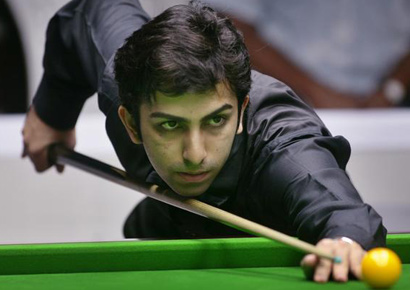
Cue sports medal winners in the Guangzhou Asian Games, led by Pankaj Advani, were honoured in Bangalore today with Alok Kumar's effort coming in for special praise.
Advani bagged billiards gold, Aditya Mehta, Brijesh Damani and Yasin Merchant secured silver in the snooker team event, while Aditya Mehta (snooker singles) and Alok Kumar (8 ball pool) bagged bronze.
At a felicitation programme organised by the Billiards & Snooker Federation of India (BSFI) and Karnataka State Billiards Association (KSBA), Advani was richer by Rs1.5 lakh as BSFI and KSBA handed him a cheque of Rs1 lakh and Rs50,000, respectively.
The silver-winning team walked away with Rs75,000, and the bronze winners pocketed Rs25,000 each, as the cue sports medal haul was hailed. Damani was not present because he was indisposed.
Merchant said he personally would like to dedicate the medal to KSBA as he expressed gratitude for the preparatory camp at KSBA which stood the team good stead at Guangzhou.
He said the camp was of "highest order", "perfectly and methodically organised".
Merchant also said Alok Kumar was a revealation in the Asian Games, putting his heart into every shot that he has played.
"Alok Kumar's medal was bigger than all of ours", he remarked, a view echoed by Advani subsequently.
Advani said, "...I totally agree Alok's performance stood out in the cue sports," noting that he beat a world champion and a "guy" who played pool all his life, and winning a bronze in a tough draw was creditable.
read more...

China: did Asian Games hide growth?

Pearl River DeltaImage via Wikipedia

China’s economy continued to power ahead last month according to the latest slew of purchasing managers index figures released on Wednesday, despite the enforced factory shutdown in southern China caused by November’s Asian Games.
The 2008 Olympics led a lot of analysts to miss the slump in the Chinese economy from the global financial crisis. With much of industry around Beijing closed down for several months during the August games in order to cleanse the air, it did not become obvious until October that the fall-off in industry was actually the result of weak demand, and not just a temporary blip created by the Olympics jamboree.
The Asian Games, which ended at the weekend with a spectacular ceremony (pictured), raise the opposite risk - that the economy is perhaps growing even more strongly than the headline figures suggest, which would be alarming given the recent surge in inflation.
As Goldman Sachs notes about the November PMI figures:
Importantly, this strong reading was achieved despite additional administrative production restrictions in the Pearl River Delta because of the Asian Games held in Guangdong Province in November.
The Goldman economists point out that the restrictions on industry did not just affect Guangzhou, the provincial capital which was the host city - they also included a number of other cities in the southern manufacturing belt, “including the industrial heavyweights of Dongguan and Foshan. These two cities combined are as important as Guangzhou in terms of the size of their GDP and much more important as industrial production base.”
The figures contain other signs of rising inflation. Shen Jianguang at Mizuho says they show that:
inflationary pressure is building up, and reflect the increasing contribution in non-food prices, rather than food prices, to the rising headline CPI [consumer prices index]. We expect November CPI to reach 4.8%.
However, Ben Simpfendorfer at RBS thinks that the November figures signal a turning point in the economy towards a modest slowdown. The decline in new orders for finished goods shows that industry has finished a process of restocking, which will ease pressure on prices. “Today’s developments support the call for the economy to “just” survive the current inflation risks,” he writes.
read more...
