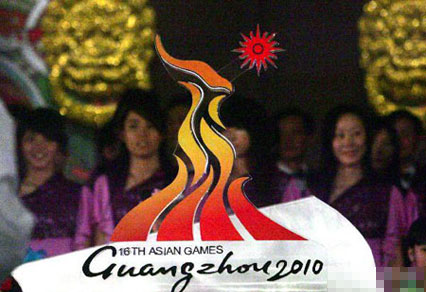
Thursday, March 10, 2011

Udupi: Golden Girl Ashwini Eyes Olympic Gold

Daijiworld Media Network – Udupi (SP)
Udupi, Mar 10: Ashwini Shetty Akkunji, who has made the country proud by winning gold medals at the Commonwealth and Asian Games, said that she has now been concentrating on winning gold in the next Olympics, and that she has been practicing hard for the same. She was speaking during her visit to Srikrishna Mutt here on Wednesday March 9.
Ashwini said that her chances of bagging a medal at Asian Championship being held in Japan are not bright because of the paucity of time for practice. She revealed that the fracture she suffered during a practice session in Bangalore about two months ago to her hand is yet to heal fully, and that this has also been affecting her performance.
She expressed happiness at being chosen as the brand ambassador of Corporation Bank, and expressed the confidence that this will be a stepping stone for her future achievements, as the bank will be extending her all the assistance she needs for her practice and achievements.
read more...

Thursday, March 3, 2011

Official: Asian Games stayed within budget, despite claims

MTR Ktt with 2010 Guangzhou Asian Games advert...Image via Wikipedia
GUANGZHOU - Finance authorities in this southern city said the 16th Asian Games and Asian Para Games last year had not left the city a huge monetary hole.
In response to criticisms made by deputies of the city's people's congress, Zhang Jieming, director of the Guangzhou finance bureau, said the city's budget for the games was 13.6 billion yuan ($2 billion).
So far, the city has used some 9.1 billion yuan, accounting for 67 percent of the budget, according to Zhang.
"I can say that the investment has been kept within the budget," Zhang said at a special news conference on Wednesday after the annual session of the local people's congress, which concluded last week.
"The funds come mainly from the marketing development related to the games, subsidies from higher governments and the sales of the Asian Games town in Panyu district," Zhang said.
Zhong Nanshan, a deputy with the Guangzhou People's Congress, claimed at the session that the games had left the city owing some 210 billion yuan.
"Actually, the government debt is not as high as the figure some deputies mentioned," Zhang said. Early in 2002, when Guangzhou launched a bid to host the 2010 Asian Games, local authorities planned a budget of about 12.1 billion yuan for the games, according to Zhang.
However, local authorities submitted a general investment plan of as high as 220 billion yuan to the central government after it won the bid.
"The 220-billion-yuan plan included the building of stadiums, Asian Games town and some key infrastructure projects from 2005 to 2010. That's why some people say that Guangzhou has invested a huge amount of money to host the games," Zhang said.
The city invested as much as 109 billion yuan to improve urban infrastructure from 2005 to 2010, according to Zhang.
"At present, the government owes some 88.4 billion yuan from urban construction over the past several years, including debt interest," Zhang said.
Zhang said that it is a common practice for local governments to collect money for urban construction through government debts, according to Nanfang Daily.
read more...

Guangzhou Promises to Release Asiad Spending Details Before 2013

The 16th Asian Games opens on November 12, 2010 in Guangzhou, capital city of south China's Guangdong province. [Photo: Xinhua]
Guangzhou's finance chief Zhang Jieming said Wednesday the total spending of the Asian Games would be released before 2013, the Information Times reports.
Zhang, the director of the Guangzhou Financial Bureau said that the city had injected 13.6 billion yuan for the 16th Asian Games held in November, 2010 - 6.3 billion yuan was used for venue construction and 7.3 billion yuan for operation and maintenance.
The details of expenditure and revenue will be made public after auditing, Zhang Jieming said at a press conference on Wednesday.
During the annual session of the People's Congress of Guangzhou city, Zhong Nanshan, a renowned medical expert and member of the National People's Congress, claimed that the Guangzhou Asiad cost more than 257 billion yuan, leaving the city with a debt of more than 210 billion yuan, according to previous reports.
Zhang Jieming denied those reports. He added that the municipal government is faced with a debt of 88.4 billion yuan, mainly because between 2005 and 2010, Guangzhou, capital city of south China's Guangdong Province, allocated 109 billion yuan for infrastructure improvement, including subway, road and bridge construction, and environmental facilities, to give the city a facelift.
But he emphasized that the local government is "prudent" towards the issue of budget, and the current debt is "affordable."
Beijing released its Olympic spending details in June, 2009, about ten months after the Olympic Games held in August, 2008.
read more...

‘Asian Games left Guangzhou in huge debt’


Beijing: A controversy has broken out over China's massive spending on last year's Asian Games in Guangzhou city after a local legislator claimed the sporting extravaganza had left the city with a debt of USD 32 billion.

While the Chinese authorities are yet to provide breakdown of the money spent on the Games, Zhong Nanshan, a deputy with the Guangzhou People's Congress said there was a big financial gap after the local authorities invested what he claimed was 257.7 billion yuan (USD 38.4 billion) on the the sporting spectacle.


Zhong said that after the Games the city is left with a 210 billion yuan (USD 32 billion) debt, which also included the previous outstanding loans.

"How will the city government find the money to improve people's living standards with such heavy debts to pay in the years ahead?" Zhong was quoted as saying

However, Zhang Jieming, director of Guangzhou finance bureau claimed that the income and expenditure for the Asian Games had balanced.

"I don't know what sources Zhong Nanshan cited. You reporters should ask him how he got his figure," Zhang told the official media.

The expenditure directly used for the games was 13.6 billion yuan, (USD two billion) with more than 100 billion yuan (USD 15 billion) also invested in improving urban infrastructure during the past five years, Zhang said.

"I haven't exchanged views on the games budget with Zhong. So far, there has not been a complete financial report. This is normal. There are several figures related to the games budget and we will unveil the official financial accounts at the proper time," Zhang said.

Many other deputies at the local People's Congress have joined Zhong in calling on the government to unveil its official report on the cost of the games.

"Guangzhou's budget income was less than 100 billion yuan last year. Where does this huge investment in the games come from? The government should give the public an explanation," Zheng Jingping, a deputy with the Guangdong Provincial People's Congress was quoted as saying.

Prior to the games' opening, Guangzhou Mayor Wan Qingliang said the investment in the games had been kept within the budget and amounted to about 120 billion yuan, (USD 18 billion).

Guangzhou, one of China's highly industrialised cities, hosted the 16th Asian Games and the Asian Para Games in November and December last year.
read more...

PH execs to fight for inclusion of billiards

Southeast Asian GamesImage via Wikipedia
PHILIPPINE Olympic Committee president Jose “Peping” Cojuangco said member-countries of the Southeast Asian Games Federation will meet on Feb. 25 in Bali, Indonesia to debate – and ultimately decide – which sports will be included in the 26th Southeast Asian Games roster.
“There will be a big debate and discussions over the events of the SEA Games,” said Cojuangco upon learning that billiards and snooker, along with women’s football will not be included in the Games this November.
The Philippines will send chefs de mission Sim Chi Tat and commissioner Chito Loyzaga to the council meeting, along with newly appointed sports and rules committee representative Steve Hontiveros to lobby for some sports and assess the situation in the run-up to the Games.
Malaysia earlier questioned the decision of Indonesian organizers to scrap billiards and snooker, women’s football and reduce the number of events in shooting, sailing and cycling.
Meanwhile, Cojuangco said he will personally oversee and supervise the training of a unified national team in cycling.
read more...

Monday, February 28, 2011

From 2 Billion to 100 Billion: Asian Games Spending Was Questioned

The translated article below from gcpnews.com highlights a set of issues related to Asian Game spending which have recently begun to surface. The main accusations are that the overall spending far exceeded the original budget and that subsequent changes to the budget were never shared with the People’s Congress. During a round of recent congressional hearings about the Asian Games, a number of Congress representatives brought these issues to light, sparking both intense debate and a window of opportunity for learning from the mistakes.
Where Did the Money Go? Asian Games Spending Was Questioned
“Everyone knows where too much money was spent on the Guangzhou Asian Games! So can’t you just stop saying that “the target for the economical budget of the Asian Games has been met?” These words were spoken out by a representative of the Municipal People’s Congress and head of the Law Department of the South China University of Technology, Ge Hongyi (葛洪义), on February 21st during the first round of congressional hearings in Haizhu District of Guangzhou City. His forthright question subsequently ignited a fierce debate about the Asian Games’ funds between two other Congress representatives.
2 Billion vs. 100 billion
Luo Jingjun (罗京军), a member of the Municipal People’s Congress and the deputy head of the Guangzhou Municipal Propaganda Department, could barely respond to Ge Hongyi’s accusation that the Asian Games spending was far too wasteful. Highly agitated, he responded by saying that if it hadn’t been for the Asian Games, Guangzhou would definitely not be the international city that it is today.
Huang Jianwu (黄建武), a member of the Municipal People’s Congress and professor at the Law School of Zhongshan University, immediately refuted, saying, “These are two different matters entirely!” During a meeting held by The State Council in 2005, It was promised by Guangzhou municipal government that Asian Games spending would not exceed 2 billion Yuan. When compared with the actual amount spent – 100 billion – it is clear that the original stated budget was way too conservative.
“The Asian Games has certainly helped raise the reputation of Guangzhou and improve peoples’ livelihoods. Of course money had to be spent, but the problem is that the government initially stated it would spend 2 billion, but then repeatedly changed the budget. Were these changes ever reported to the Municipal People’s Congress? And was it ever reviewed by the Municipal People’s Congress? Of course there are reasons behind the changes, but did these decisions by the government respect the People’s Congress or the will of the people?” Huang Jianwu resolutely showed that the problem lies with the rule of law. He continued by saying that if the problem isn’t fully addressed then things will only get worst in the future. “If you do things in such a careless way, others are going to think you’re not being democratic. Can Guangzhou become an influential model in terms of democratic rule of law, one that cities all across the country can use as an example? It is precisely this question that we should be properly summarizing.”
How exactly was the money spent?
During the second congressional hearing in Panyu District of Guangzhou city, People’s Congress representative Chen Guo’an (陈国安), also raised the same issue: “The government report points out that integrity is needed to organise the Asian Games. Mayor Wan Qingliang (万庆良) once said that the Asian Games used 120 billion Yuan and even went on to say that over 1 billion Yuan were saved overall. But on what specifically was all this money spent? For example, is it reasonable and necessary to use the funds on environmental management and asset management? From the closing of the Asian Games to date, there has not been one report that clarifies which projects were related to the Asian Games and which ones weren’t.”
“This is a problem related to winning the public’s trust. The government should launch an audit.” Chen Guo’an continued by stressing that the audit should not necessarily only be carried out by the Audit Department, but should also encourage the participation of society, by including the representatives from professional committees of the Municipal CPPCC and the People’s Congress. “That way [the audit] will be more open and will therefore win over the trust of the people.”
read more...

Wednesday, February 2, 2011

Aamir Khan Finds a Fan in Vijender Singh

Aamir Khan Finds a Fan in Vijender Singh

Bollywood Chaska News Network 1:08 PM IST January 28

Aamir Khan surely has a great fan following, but he can add this special fan to his list now. Olympic and Asian Games medalist, Vijender Singh, has recently confessed of being an Aamir Khan fan. Since Vijender is always heard talking about Bipasha Basu and Priyanka Chopra, this surely comes as a surprise from the ladies man!

Vijender was spotted in Delhi with a new look. He was seen in a beard. Now Vijender said that the real reason behind the beard is Aamir Khan. Vijender being an Aamir fan is inspired with Aamir’s new look and decided to go for it.

He was a little conscious at first, but later on he started receiving compliments for the same. So Viju decided to continue with his look.

This talented boxer from Bhiwani will be soon seen on Saurav Ganguly’s quiz show “Dadagiri”. The young lad is also getting many Bollywood offers, but the boxer wants to currently focus on London 2012 Olympics.

Aamir and Vijender have met before during the screening of Aamir’s film DHOBI GHAT. "I really enjoyed his company. He's also invited me for Imran and Avantika's reception in Mumbai next month, and I will be going for it," says the Asian Games gold medalist.

How about a movie with Aamir, Vijender?
read more...

Gowda to get Asian Games bronze

New Delhi, Jan 26 (PTI) India''s record medal haul in the Guangzhou Asian Games will increase by one more as discus thrower Vikas Gowda is set to be handed a bronze after a Qatari athlete tested positive for a banned substance.
Ahmed Dheeb of Qatar, who had won silver in the men''s discus with a throw of 64.56m, tested positive for exogenous testosterone metabolites and Olympic Council of Asia said he will be stripped of his medal.
Iran''s Mohammad Samimi, who had finished third with 63.46m, will now get the silver while Gowda, who was originally fourth with an effort of 63.13m, will be handed the bronze.
Another Iranian, Ehsan Hadadi had won the gold with 67.99m.
With Gowda''s bronze, India''s medal count will increase to 65 (14 gold, 17 silver, 34 bronze).
Gowda is still to get an official intimation and said he would be happy if he is getting the bronze.
"I have yet to get any official information that I am getting the bronze. But I will be happy if I am getting the bronze. For any athlete who gets a medal in events like Asian Games is always great," he told PTI from United States.
The OCA announced that Palestinian Awajna Abdalnasser, who took part in men''s 800 metres race, also tested positive for norandrosterone, another anabolic agent, taking the total number of dope cheats in the Asian Games, held in Guangzhou in China last November, to four.
Two dope cases, involving an Uzbek judoka and a wrestler, had cropped up during the Games.
read more...

Volunteers gearing up for Winter Asian Games

Watch Video

Play Video

Whenever organizers put together international sporting events, volunteers play an important role. Here's how unpaid workers are making it happen at the Winter Asian Games.
These young people are working as volunteers...and helping with the 7th Winter Asian Games. They're picking up their access passes and clothes at the main press center, all hoping to contribute and make the Games a success.
Around 4,000-to-5,000 people signed up to become volunteers. Finally, 2,200 were chosen for the Games.
Knowing a foreign language helps. Some Chinese students studying in Kazakhstan are among the volunteer workers.
A Winter Asian Games Volunteer "I'm from China, and knowing Chinese is my advantage being a volunteer. I think I can be a translator and help people from China when needed."
read more...

Adel Khalid secures Abu Dhabi race berth

  • UAE sailor is one of two sailors expected to represent the nation in the Asian Games in China next month.
  • Image Credit: Supplied picture
Abu Dhabi: UAE national, Adel Khalid, is the latest crew member to secure his place aboard the Abu Dhabi Tourism Authority (ADTA)-backed Abu Dhabi Ocean Racing team for the 2011/12 Volvo Ocean Race, making him the first Emirati sailor to compete in this ‘Everest of Sailing.'
Khalid, who represented the UAE in both the Beijing Olympics in 2008 and the Asian Games in November 2010, beat more than 120 Emirati hopefuls to earn his spot in the 11-strong sporting crew, which includes Olympic medal winners, America's Cup victors, Volvo Ocean Race champions and Guinness World Record holders.
The 22-year-old now carries the hopes of the emirate on his broad shoulders as he looks to honour the considerable responsibility of working towards, and sharing, the aspirations of his homeland in one of the world's toughest, most extreme sporting challenges.
"The search for a UAE national to represent us in this challenge has been extensive, in-depth and highly competitive. This exhaustive process was necessary because the race demands and standards are exceptionally high, as are our own aspirations," said Shaikh Sultan Bin Tahnoon Al Nahyan, Chairman, ADTA and Team Principal of Abu Dhabi Ocean Racing.
"We have been impressed by many of the applicants whose enthusiasm has been a credit to the nation. The final selection went down to the wire and at the end of the day Khalid was the unanimous choice and we congratulate him on this achievement. All three finalists were worthy contenders but Khalid had the edge in terms of sailing experience as well as his developmental potential."
In a televised awards ceremony at Emirates Palace hotel, Khalid was selected just ahead of fellow Emirati finalists, Butti Al Muhairi and Abdul Aziz Abdullah.
read more...

Saturday, January 22, 2011

Scribes to honor Azkals, Asiad gold medalists

Nonito Donaire pic by McBride61Image via Wikipedia
MANILA — Asian Games gold medalists Rey Saludar, Biboy Rivera and Dennis Orcullo and 2010 World 9-Ball king Francisco “Django” Bustamante will receive the “Athlete of the Year” title in the 2010 Philippine Sportswriters Association (PSA) Annual Awards Night on March 5 at the historic Manila Hotel.
Saludar, Rivera and Orcullo saved the face of the 284-man Philippine delegation in the 2010 Asian Games in Guangzhou, China by bringing home three gold medals. Bustamante meanwhile, finally nailed the title that has long eluded him when he won the World 9-Ball Championship in Doha, Qatar.
Also to be conferred with the prestigious awards are the Philippine men’s football team, popularly known as Azkals, following their run in the Asean Football Federation Suzuki Cup where it made the semifinals for the first time.
The Philippine men’s poomsae team which won the gold medal in the 5th WTF World Poomsae Championship in Tashkent, Uzbekistan, and former world flyweight champion Nonito Donaire Jr., who was unbeaten in three fights last year will be bestowed with the fitting accolade.
Saranggani Rep. Manny Pacquiao, who made 2010 memorable when he successfully defended his WBO welterweight belt against Joshua Clottey, and then claiming a record eight world championship by battering Mexican Antonio Margarito for the WBC super welterweight title, will be also cited.
read more...

Flame of Asian Games comes to Kostanay


KOSTANAY. January 20. KAZINFORM /Peter Plakhotnikov/ The Flame of the Asian Games travels across Kostanay. This city became the ninth city of 16 to welcome the Flame of the Asian Games.

The Flame arrived in Kostanay yesterday evening and today in the afternoon it has traveled across Kostanay. The first stage of the relay started in Kostanay City-Center. 60 torch bearers are involved in the relay.

The Flame of the Asian Games had been burning from 1:30 pm for two hours in the City-Center. A concert at the Sports Palace was final event that completed the relay program in the city. Afterwards the Flame will travel to Petropavlovsk
read more...

Canton has can-do: Vibrant culture and shopping found in today's Guangzhou


Liwan is a great place to pick up antiques. Photo: Chen Jieying

Last year was an unforgettable one for Guangzhou. The successful hosting of the 16th Asian Games and Asian Para Games increased the city's profile around the continent, if not the world, while the iconic new Canton Tower opened and was an enduring image of both the opening and closing ceremonies.
But 2011 offers fresh challenges for the capital of Guangdong Province – can it build on the legacy of the Games and become the world-hub it so wants to be? Let us take a cultural and commercial look at the city.
Art zones and bar streets
Guangzhou is not known as one of China's hipper cities. It lacks both the glamour of Shanghai and Beijing's cultural depth, and although not as hectic as nearby Hong Kong, it isn't nearly as relaxed a place as Chengdu or Kunming – but any suggestion that the City of Rams is a cultural desert is wide of the mark. Iconic new buildings such as Zaha Hadid's Guangzhou Opera House are part of an official drive to promote Guangdong's capital as a more cosmopolitan, creative place, but really this is just official recognition of something that's been happening on a smaller scale for quite some time.
One obvious example of a cooler Canton can be seen in the evolution of the city's nightlife. Small, stylish restaurants have started to appear in its backstreet and converted houses, and bars and coffee shops are blooming. An increasing number of such places are giving people the option to eat, drink and be merry in the open air.
Even better for Guangzhou's creative credentials is the fact that a number of local nightspots are actively promoting live music – and not the kind that involves cover bands playing "Hotel California." Tianhe's C:Union and its younger sibling T:Union, which is located inside Guangzhou's Sculpture Park, are known for an eclectic and ever-changing roster of live acts, and they are not alone. Venues 191 Space and Tekkwunn Livehouse in downtown Guangzhou, and Iron Age Space down at Panyu's University City, are luring more independent and international acts to South China, as well as providing a home for an increasingly diverse and multicultural group of locally based performers. Be it European electro-pop or Chinese metal, Cantonese hip-hop or Kazakh folk, musicians are not short of places to play, nor punters keen to listen to them.

Shangxia Jiu Lu aka "Up-Down" 9 Road. Photo: Chen Jieying
In some cases, these venues offer much more than music. Ping Pong, for example, tucked discreetly off a side-street near the Xinghai Conservatory, is a charming bar in its own right, and also known for its contemporary art life. It stages all sorts of exhibitions and performances, and last year launched the Ping Pong China-Europe Centre for Performance Art, which is based at the 1850 Creative Zone down in Fangcun, itself one of a number of new spaces for the arts being carved out of Guangzhou's post-industrial hinterland.
One of the prototypes for this mode of creative rebirth is Loft 345. Evolving out of an even more rough-and-ready space called Park 19, the Loft has it all: cheap booze, dodgy toilets, a cluster of artists-in-residence, and a constant trickle of curious visitors, who venture into the interior of the otherwise-nondescript building it inhabits in search of something a bit different.
The Loft was one of the first of its kind in Guangzhou, but the idea of turning former factories into creative spaces has reached a climax of sorts at Redtory. Originally a canning factory near the Pearl River in Yuancun, Redtory is now an art district, taking Beijing's 798 as its template and carefully reproducing what every edgy art zone in contemporary China needs. Obscure location?
Check. Disused industrial buildings reincarnated as cavernous galleries? Check. Assorted socialist realist sculptures? Check. Galleries with names like "Iron Curtain," or simply "916"? Once again, check.
But however consciously it has mimicked 798 – or what 798 has become – Redtory still has some charm of its own. For a former industrial area, it's surprisingly green in places, and has the kind of  chilled-out atmosphere not always easy to come by in crowded Guangzhou. It also attracts a lively mix, from footballers and fencers who come to take advantage of its sports facilities, to the camera-toting couples and families who photograph each other draped against an "arty" backdrop. Most encouragingly, early film screenings, events and exhibitions suggest that Redtory has the potential to become something very interesting in future.
And if this idea of the arts doesn't grab you, it doesn't matter. Today's Guangzhou has plenty of alternatives, be it the canal-crossed, quintessentially Cantonese artists' colony of Xiaozhou Village, or internationally recognized institutions like the Guangdong Museum of Art and Guangdong Modern Dance Company. But more intriguing – and perhaps more truly representative of Guangzhou – are smaller, more independent entities like Vitamin Creative Space and the Libreria Borges Institute for Contemporary Art. Whether it's hosting a mini film festival or supporting Chinese translations of French philosophy, both have been doing their own thing for years. The wider art-world may have started to pay attention to what's been going on in the city, but for many Guangzhou-based artists it makes little difference – they'll keep on creating, whether anyone else is fortunate enough to notice or not.


Redtory adds new colour to Guangzhou's culture. Photo: Chen Jieying

No shortage for shoppers
The well-worn phrase "shop till you drop" was made for Guangzhou, perhaps explaining why so many tasty eateries can be found on and around the busy high streets. The problem is knowing how to shop clever. Guangzhou caters to every taste, from high-end designer gear to cheerful tat. Best of all, even for the non-shopper, there is much to enjoy in the city's markets, malls and streets.
Take Yide Lu as a classic example. Situated close to the Pearl River and Haizhu Square, it is a great place to browse, bargain and finally buy, whatever age you are. The beauty of Yide Lu is that One Link is just one of the shopping options, with even seemingly basic frontages masking huge shopping spaces in behind. This is a place where fortune favours the brave. Just dive in and enjoy the vast array of toys, tricks, decorations, scarves and heaven-knows-what else on offer at any particular time.
Nearby, there are a couple of interesting places to seek sanctuary, notably the impressive Stone Church on Yide Lu itself. For those needing a different sort of spiritual revival, opt for the beer garden of the 1920 bar beside the Pearl River, where weary shoppers can be found in the early evening surrounded by huge plastic bags full of their many purchases, sipping on a hard-earned happy hour cocktail.
If Yide Lu is tat-tastic, Kangwang Lu is the place for antiques, pearls and jade. The old face of this part of Liwan District has been changed, although thankfully not completely, with large shopping malls replacing simple street stalls in recent years.
Liwan Plaza itself is a remarkable shopping outlet with floor upon floor selling pearls. Across the road, there is a similarly bewildering array of stalls selling jade. Whichever jewel you are interested in buying, it is advisable to have some knowledge about how to identify the quality of the goods on offer because, unsurprisingly, everyone seems to promise theirs are the very best – but bargains are available if you have the patience and the know-how to find them.
Old Guangzhou characteristics are clearly visible in the narrow passages that snake around the jade market and it is never a hardship to pass a couple of hours just following your nose and seeing what is on offer. The hassle so prevalent in many parts of Asian markets, and elsewhere around the world, is joyfully absent, as are the tour buses found in similar parts of Shanghai, Beijing and Xi'an.
Find the square with the antique stalls and there is one of Guangzhou's hidden treasures. The Tibetan shopfront is small and simple, often featuring a rug and a glass jewelry case. But the real pleasure comes when being taken around the corner, through a door, up the stairs and into an Aladdin's Cave full of wonderful furniture, rugs, prints and ornaments. The friendly owners are more than happy to let you browse at your leisure and there is never any hard sell.
Teem Mall and China Plaza are just two of many offering a massive variety of stores, but the adventurous shopper need not restrict themselves to inside the malls. Both are surrounded by interesting alternatives to part with your hard earned cash.
Throw in the Haiyin cloth market, where you can get clothes made-to-measure, the chaotic but entertaining sprawl around the old train station, the huge leather wholesale markets on Jiefang Beilu, and the ever-popular Beijing Lu, and the options really are limitless.

read more...

NEP Visions lands Asian Games deal

Outside broadcast suite of trucks and satellit...Image via Wikipedia

Outside broadcast company NEP Visions has embarked on one of its most ambitious projects to date, after securing a $1m (£636,000) deal to supply equipment and technical crew for the seventh Asian Winter Games later this month.
The Staines-based outfit will provide flypack OB systems for six venues in Kazakhstan, and projects manager Tim Allsop said the eight-day event was stretching the firm’s resources.
“We’ve had to dive into the hire market to help with cross-hiring of cameras,” he said.
As well as laying 75km of fibre and Triax cable, Visions will supply more than 100 camera channels with a mixture of Sony 1500 and 3300 HD cameras and Philips HD cameras, 56 large lenses, 28 EVS servers and 36 HDCAM video recorders.
“The majority of our equipment is tied up on football contracts,” Allsop continued. “We can source vision mixers and monitor stacks from our mother firm in the US, but it’s the high-ticket items we don’t have lying around for one-off projects.
“We only released about 16 of our own cameras and we sourced the rest from the UK hire market and abroad.”
Allsop said that NEP Visions would plough 40% of the $1m generated by the event back into the UK hire market.
read more...

Boxing body chosen NSA of the Year

Photo is loading...
Rey Saludar
| Zoom
MANILA, Philippines - Sustaining its remarkable performance in the 25th Southeast Asian Games, the Amateur Boxing Association of the Philippines (ABAP) delivered the big punches for Philippine sports in year 2010.
Making up for a disappointing bronze medal finish in Laos SEAG in 2009, Rey Saludar pulled off a stirring victory over a fancied hometown bet to bag the gold medal in the 52kg (flyweight) division in the 16th Asian Games in Guangzhou, China.
A heavy underdog, the 23-year-old Saludar bucked the odds and outpunched the fancied Yong Chang, 13-11, to snatch the gold right under the nose of a huge stunned crowd at the Foshan gymnasium.
Coupled with the silver medal bagged by Annie Albania (women’s flyweight) and a bronze in the men’s 49 kg (light-flyweight) courtesy of another Saludar, Victorio, the younger brother of Rey, ABAP capped its Asiad campaign with a 1-1-1 total output for the best medal production by any of the sports associations in the 284-strong Philippine delegation.
For its continued commitment to excellence as demonstrated by another remarkable success in the ring, ABAP will be conferred with the National Sports Association (NSA) of the Year award by the Philippine Sportswriters Association (PSA) in its annual Awards Night set March 5 at the Manila Hotel.
For ABAP, the honor bestowed by the country’s oldest media organization composed of daily broadsheets and tabloids, is the second in the last four years since being recognized with the same title in 2006, although the very first one since the group of chairman Manny V. Pangilinan and president Ricky Vargas took over the association in 2009.
Previous winners of the coveted plum include the Philippine Taekwondo Association (2004), Philippine Dragon Boat Federation (2005), Philippine Aquatics Sports Association (2007), the Philippine Wushu Federation (2008) and the Philippine Amateur Track and Field Association (2009).
Responsible for one of three gold medals the country won in the Asiad, Saludar was also chosen by the PSA as its Athlete of the Year recipient during the awards gala also presented by Accel, a distinction he shares with fellow gold winner Biboy Rivera (bowling) and Dennis Orcullo (billiards), together with pool great Francisco “Django” Bustamante.
ABAP hopes to ride the crest of its success now that the build-up for its ultimate target – the Olympics – goes full blast this 2011 through a major qualifying meet to be held in Azerbaijan this September.
As testimony that it’s leaving no stones unturned in its quest to give the country a historic first ever Olympic gold, ABAP launched its “Suntok Ginto” program aimed at not only tapping corporate sponsors to help the cause of the national team, but reach out to every Filipino as well through their modest P1 donation.
“Our sight is in our long term goal and our battlecry is `Suntok Ginto’ Para sa Olympics,” said Vargas.
Apart from the Asiad, 2010 also saw the Saludar brothers pocketed a gold medal each in the 31st Tammer Cup in Finland where the country emerged as the overall champion. Victorio was named as the Best Fighter of the Tournament.
The Filipino pugs also outdueled regional rival Thailand for the overall championship of the first MVP Cup International Boxing Friendship Cup staged in the country, nailing a total of eight gold medals courtesy of Albania, Josie Gabuco, Alice Kate Aparri, Nesty Petecio, Analiza Cruz, Charly Suarez, Joegin Ladon and Delfin Boholst.
Likewise, a couple of bronze medals were brought home from tough international competitions such as the World Women’s Boxing Championship, World Youth Championship, King’s Cup and China Open.
read more...